
You are here
Election Candidate profiles: NDP-John Rafferty
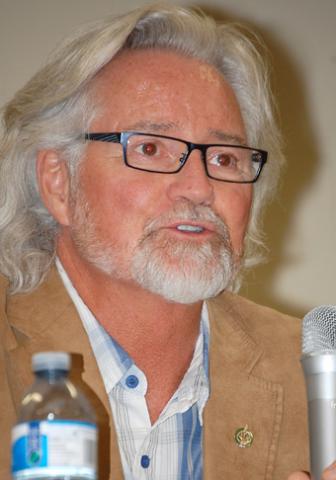
I’ve been honoured to serve as your New Democrat MP since 2008.
Earlier in life, I worked hard to earn two university degrees—one in English and the other in education—as well as a certificate in dispute resolution from Lakehead University and a diploma in broadcasting from Confederation College.
Following my studies, and before I stood for election, I was the proud owner/operator of a local small business, Rafferty Communications, which produced components for health, training, and safety videos.
I also worked as a teacher—and was the first-ever high school principal in Rankin Inlet. As well, I spent time abroad teaching with World University Service Canada (WUSC) in Africa.
Today, I live in Neebing with my wonderful partner, Pam, and am the proud father of three wonderful adult children.
Why are you running to be the MP for Thunder Bay-Rainy River?
When I first decided to put my name forward as a candidate for MP, it was because I believed the issues and concerns of our riding and region were not being properly represented in Ottawa. We had no voice.
In my time serving as your MP, I’ve done everything possible to put and keep our local and regional priorities on the national agenda.
I have tabled bills and motions designed to support and revitalize our forestry sector, to establish a permanent infrastructure fund for small rural communities, and to assist employees recover what is owed to them when an employer like Buchanan Forest Products or AbitibiBowater enters bankruptcy.
I am seeking another mandate so I can continue to be a strong voice for our riding and our region as part of Canada’s first federal NDP government.
What is the single-most important issue to you in this federal election?
Without question it is our struggling economy. Stephen Harper and the Conservatives talk a good game with their tax cuts for large corporations that employ more than 500 employees, but how many of those are employing people in our riding?
Many companies in the forestry sector aren’t making money so they aren’t even paying taxes.
Sadly, we are all too familiar with the struggles of this sector here in Fort Frances, but there has been no effort made by this Conservative government to assist families and businesses that have been hit hard by the loss of our mill.
These tax cuts for large corporations also aren’t helping to develop the “Ring of Fire,” which still is stuck in neutral after 10 long years of this tired Conservative government.
Our economy is struggling, but Tom Mulcair and Canada’s New Democrats are ready to get it moving again.
If elected, how would you help kick-start the economy in the riding?
New Democrat leader Tom Mulcair has put forward a clear plan to help our local and regional economy. The most important measure, which will be passed into law in our first 100 days, will be a reduction of the small- and medium-sized business income tax rate from 11 percent to nine percent.
All told, 89.9 percent of all working Canadians are employed by businesses with fewer than 500 employees, in every community (rural and urban, large and small) in our riding and across Canada.
Reducing the income tax rate for small- and medium-sized businesses is a fair and effective way to stimulate our local, regional, and national economy.
New Democrats also are committed to working with First Nations to improve education and training for youth, and reduce barriers to the development of our natural resources.
With our strong team of Northern Ontario MPs, a team which soon will include Howard Hampton from Kenora, our federal government will work hand-in-hand with First Nations and finally develop the “Ring of Fire” to the economic benefit of all of Northwestern Ontario.
Should the pensions of retired workers be taxed?
Canada’s New Democrats will not change the existing tax rules for pension income earned by Canadians.
As the party’s critic for pensions, I personally have worked—and remain committed—to securing both public and private pension plans.
Our NDP government will reverse the Harper Conservatives’ decision to raise the age of retirement from 65 to 67 years, we will work with the business community and the provinces to enhance payments under the Canada Pension Plan, and we will act to better secure private pension plans in the event their employer enters bankruptcy.
And while my Conservative opponent continues to spread rumours and misinformation to the contrary, Canada’s NDP will preserve income-splitting for seniors.
Should the government enact a stricter immigration policy?
This is a tough question. On the one hand, I believe the number of immigrants we accept into Canada each year is about right. On the other hand, we all have seen the heart-breaking images of the more than four million Syrian refugees who are fleeing the civil war in that country.
The United Nations has asked countries around the world to assist with the Syrian refugee crisis, and many have. Germany has taken in more than 105,000 refugees while Sweden has accepted more than 30,000 so far.
Canada has pledged to accept 11,300 by 2017 but we have taken in just 2,374 thus far.
We believe the current annual rate of immigration for standard applicants is at an acceptable level, but an NDP government will welcome 46,000 Syrian refugees to Canada over the next four years.
With a country as large and rich as ours, we believe this offer is both generous and reasonable.
If you could be any animal, what would it be and why?
I’ve never been asked that one but I would have to say a moose.
I’m tall, strong, enjoy being in the bush, and always hold my ground.